 WaterCalcLab
Sprinkler Runtime Calculator
Estimate runtime using the measured total flow of one zone and a chosen net dose.
Your result
Bars compare only results in the same unit group. They are normalized, not a time-series forecast.
Planning result based on your inputs.
How this tool works
Estimate runtime using the measured total flow of one zone and a chosen net dose.
time = area × net depth/(η × flow)Example calculation
The prefilled form is a worked example. Its base-unit inputs and expected outputs are shown below; use the reset button to restore it.
| Input | Example |
|---|---|
| Area | 100 |
| Target net water depth | 20 |
| System efficiency (separate losses) | 0.9 |
| Measured total flow | 10 |
Frequently asked questions
How should I choose the inputs?
Use measurements and local records for the stated period. All preset values are illustrative examples, not recommendations.
What does this result leave out?
Average flow does not guarantee uniform application. Catch-can measurements and cycle-and-soak may be needed to avoid runoff.
Continue your plan
Garden Water Requirement Calculator
Apply an ET?/Kc water balance for a garden hydrozone. ET? is a daily input, not calculated weather data.
Open calculator ↗Garden irrigationIrrigation Water Calculator
Convert a chosen net application depth into gross water volume with an explicit efficiency.
Open calculator ↗Garden irrigationDrip Irrigation Calculator
Calculate nominal zone flow and delivered volume from emitter count, measured emitter flow and runtime.
Open calculator ↗Related reading
 Garden irrigation
Common Irrigation Planning Mistakes
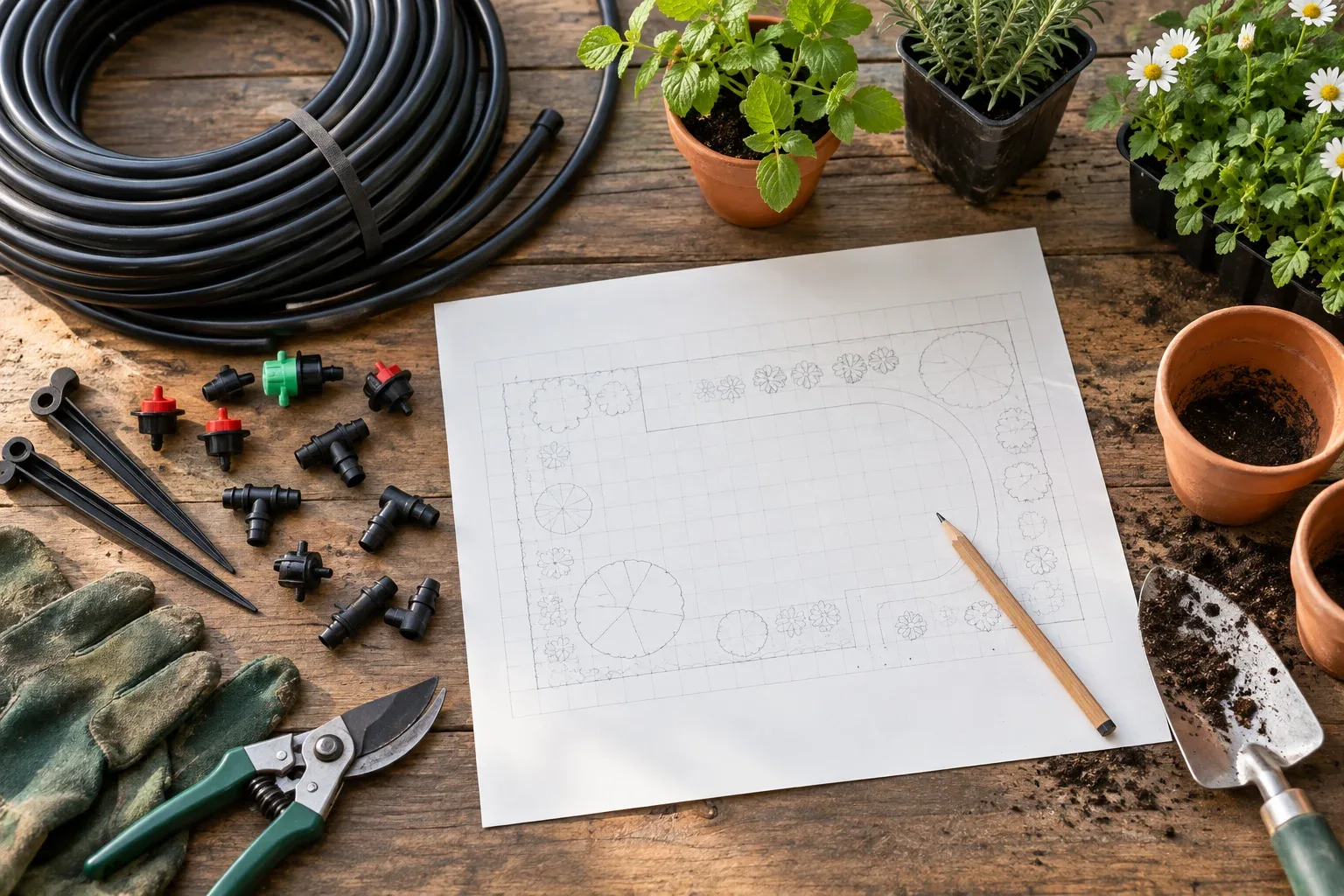
An area-based water volume is only the beginning. A working plan also needs outlet placement, operating pressure, flow, runtime and a watering window. Draw the route from source to each zone and note elevation changes. A calculator can produce a correct volume while the installation still fails to distribute it to the plants that require it.
Read guide ↗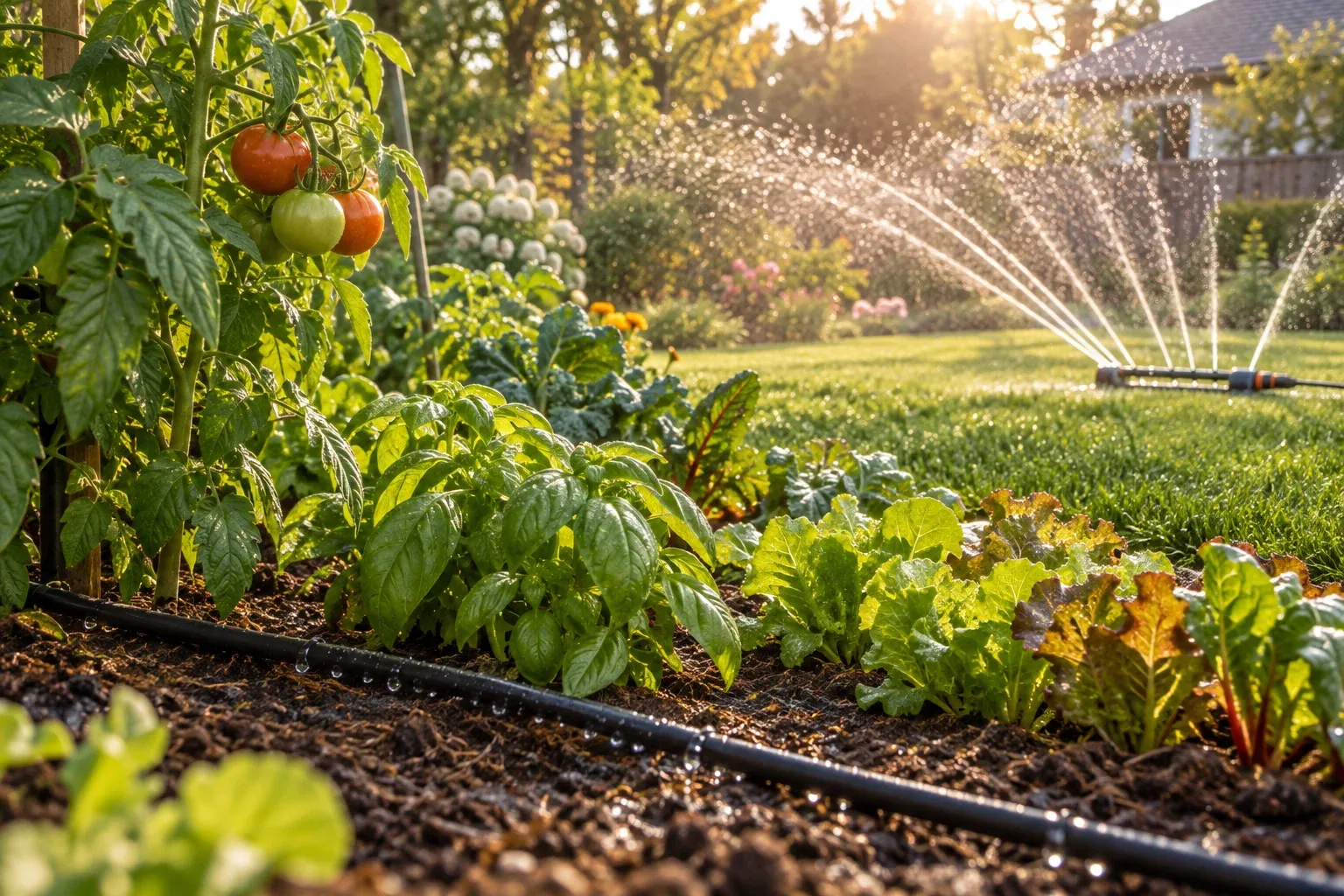 Garden irrigation
Drip Irrigation vs Sprinklers
Compare methods for the same planted area and required root-zone water. Drip can suit rows and individual plants; sprinklers can serve continuous areas where their distribution is appropriate. The comparison should include installation, filtration, pressure, maintenance and how planting changes over time. Do not select a method by quoting a universal savings percentage detached from the actual site.
Read guide ↗Sources & method references
Method version 1.0 · Last reviewed: 2026-10-10