WaterCalcLab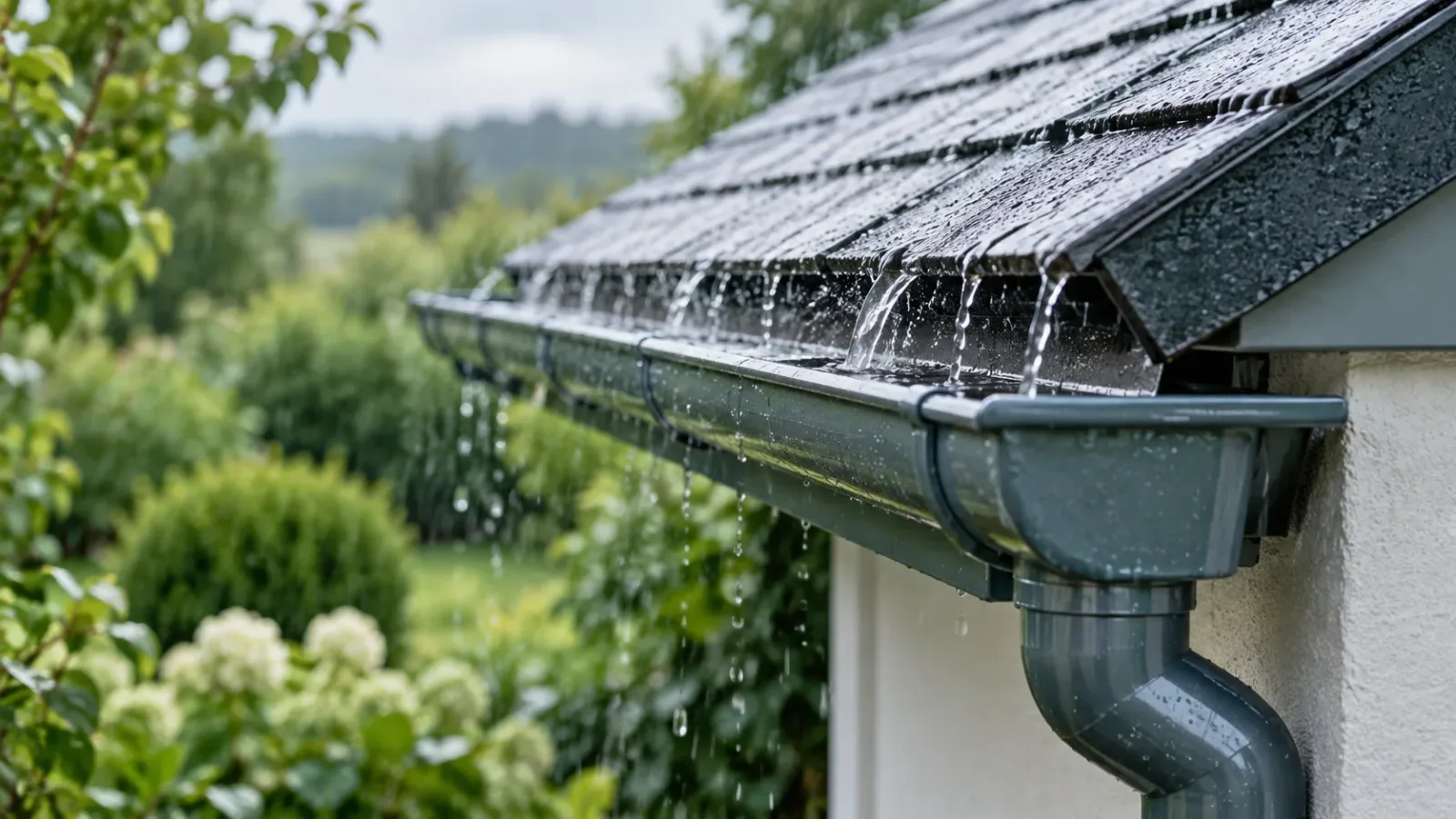
Evaluate the existing roof first
The best roof for a project is not necessarily the roof with the highest estimated runoff. Start with its condition, maintenance access, material documentation and intended water use. Replacing a serviceable roof solely to increase yield requires a separate financial and environmental comparison. Collection equipment should not conceal a deteriorating roof or prevent necessary repairs.
Make a materials inventory
Record roof covering, paint or coating, flashing, sealants, gutters and any equipment that drains onto the roof. A material label by itself does not describe the complete catchment. Ask suppliers whether their particular products are suitable for the intended application. An older coating with unknown composition is an unresolved question rather than a reason to assume compatibility.
The 225 L difference does not establish water quality or a material-specific coefficient.
75 m² × 20 mm; factors are selected scenarios.
Compare quantity with transparent assumptions
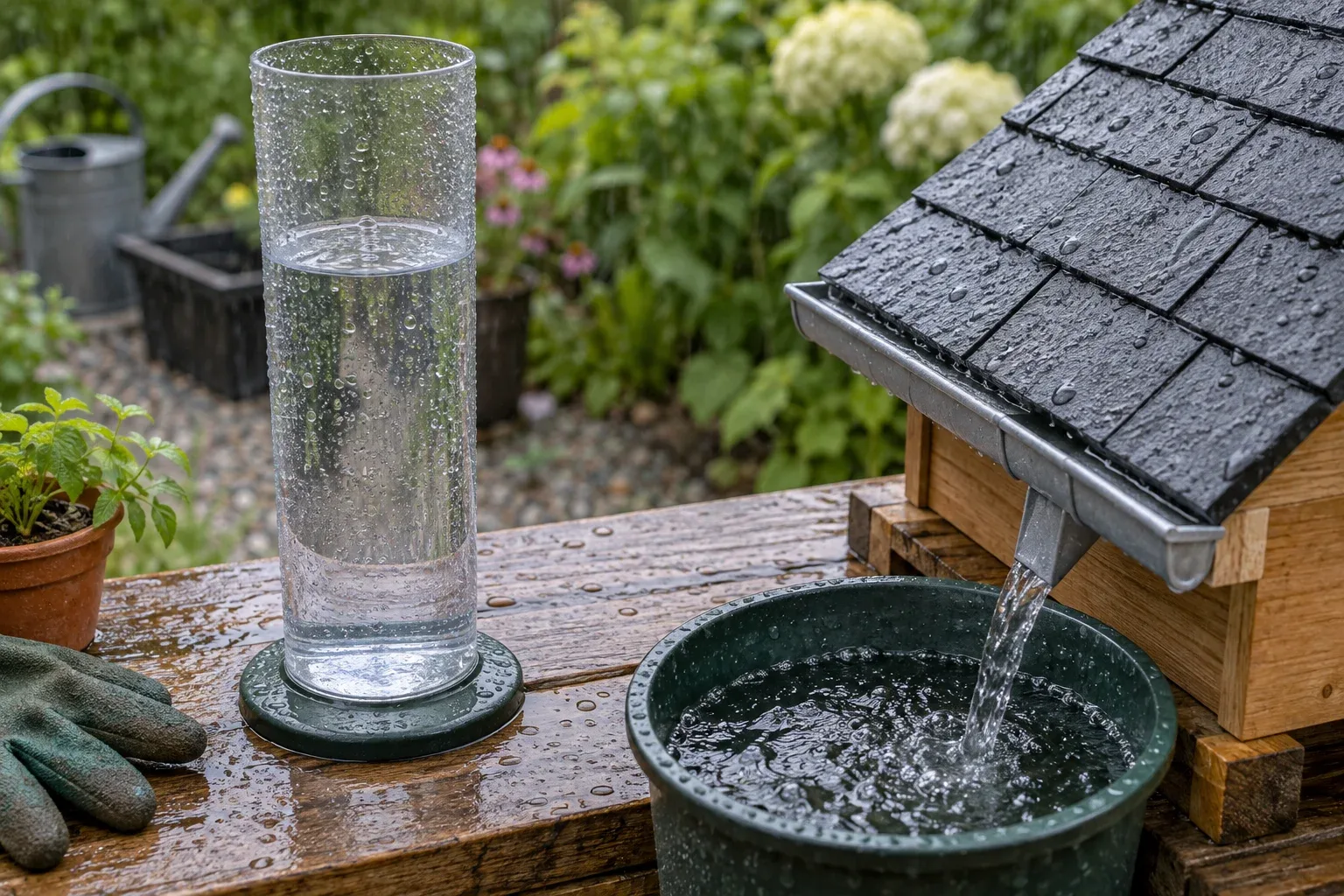
For a 75 m² catchment and a 20 mm event, gross rainfall is 1,500 litres. If one assessment uses a capture factor of 0.75 and another 0.90, estimated inflows are 1,125 and 1,350 litres. The difference is 225 litres for this event. These are comparison assumptions; they do not establish a measured coefficient for tiles, metal or any other named product.
Avoid a false quality ranking
A smooth roof may appear attractive for collection, but a yield calculation cannot detect dissolved contaminants or microorganisms. Keep water-quality suitability separate from runoff performance. For edible gardens, indoor use or any exposure-sensitive application, obtain locally appropriate guidance. Drinking-water use requires a treatment, monitoring and regulatory assessment outside the scope of this roof comparison.
Inspect where performance is lost
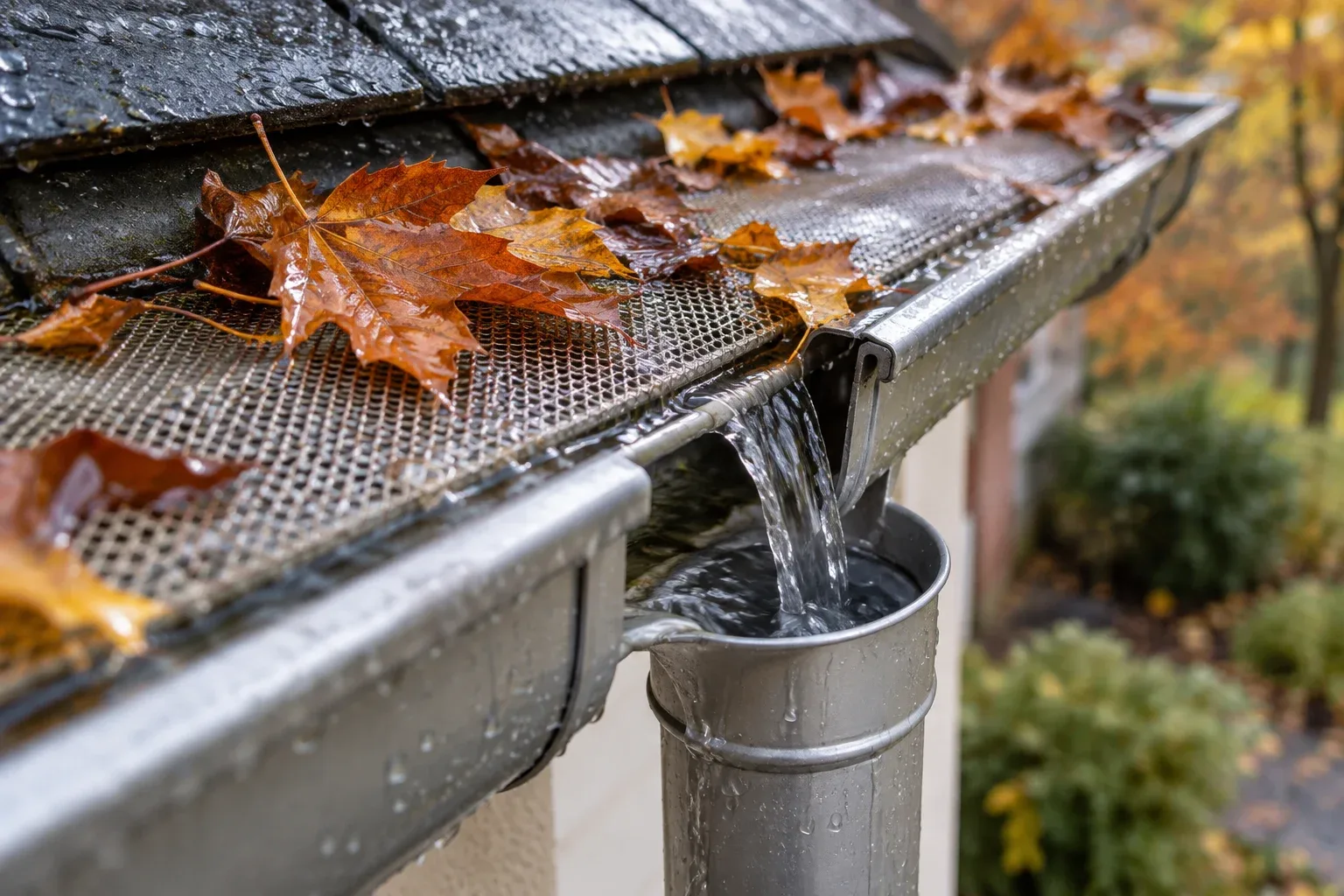
A good covering still delivers poorly if a valley spills beyond the gutter or a downpipe is disconnected. Observe several ordinary rain events safely from ground level and photograph spill points. Maintenance may recover more useful water than changing the covering. Do not climb onto wet roofs; use professional inspection when the relevant components cannot be viewed safely.
A purchasing checklist
- Identify every material in contact with runoff.
- Obtain product-specific documentation.
- Check condition and repair plans.
- Confirm contributing footprint.
- Assess nearby contamination sources.
- Inspect valley and gutter capture.
- Compare maintenance access.
- Request water-use advice before specifying treatment.