 WaterCalcLab
Rainwater Storage Duration Calculator
Divide usable storage by a constant daily demand to estimate rainless supply duration.
Your result
Bars compare only results in the same unit group. They are normalized, not a time-series forecast.
Planning result based on your inputs.
How this tool works
Divide usable storage by a constant daily demand to estimate rainless supply duration.
days = capacity × usable fraction ÷ daily useExample calculation
The prefilled form is a worked example. Its base-unit inputs and expected outputs are shown below; use the reset button to restore it.
| Input | Example |
|---|---|
| Tank capacity | 3000 |
| Usable storage fraction | 0.9 |
| Daily demand | 100 |
Frequently asked questions
How should I choose the inputs?
Use measurements and local records for the stated period. All preset values are illustrative examples, not recommendations.
What does this result leave out?
This is hydraulic supply duration, not a shelf-life or water-safety prediction. Demand, initial fill and leakage may change.
Continue your plan
Rainwater Tank Size Calculator
Size usable storage for a chosen rainless interval and compare annual supply with constant annual demand. Rainfall here must be annual.
Open calculator ↗Water storageWater Tank Volume Calculator
Calculate exact geometry from internal dimensions for a vertical cylinder, box or sphere.
Open calculator ↗Water storageWater Tank Fill Time Calculator
Estimate refill time from current contents and a constant inlet flow.
Open calculator ↗Related reading
 Water storage
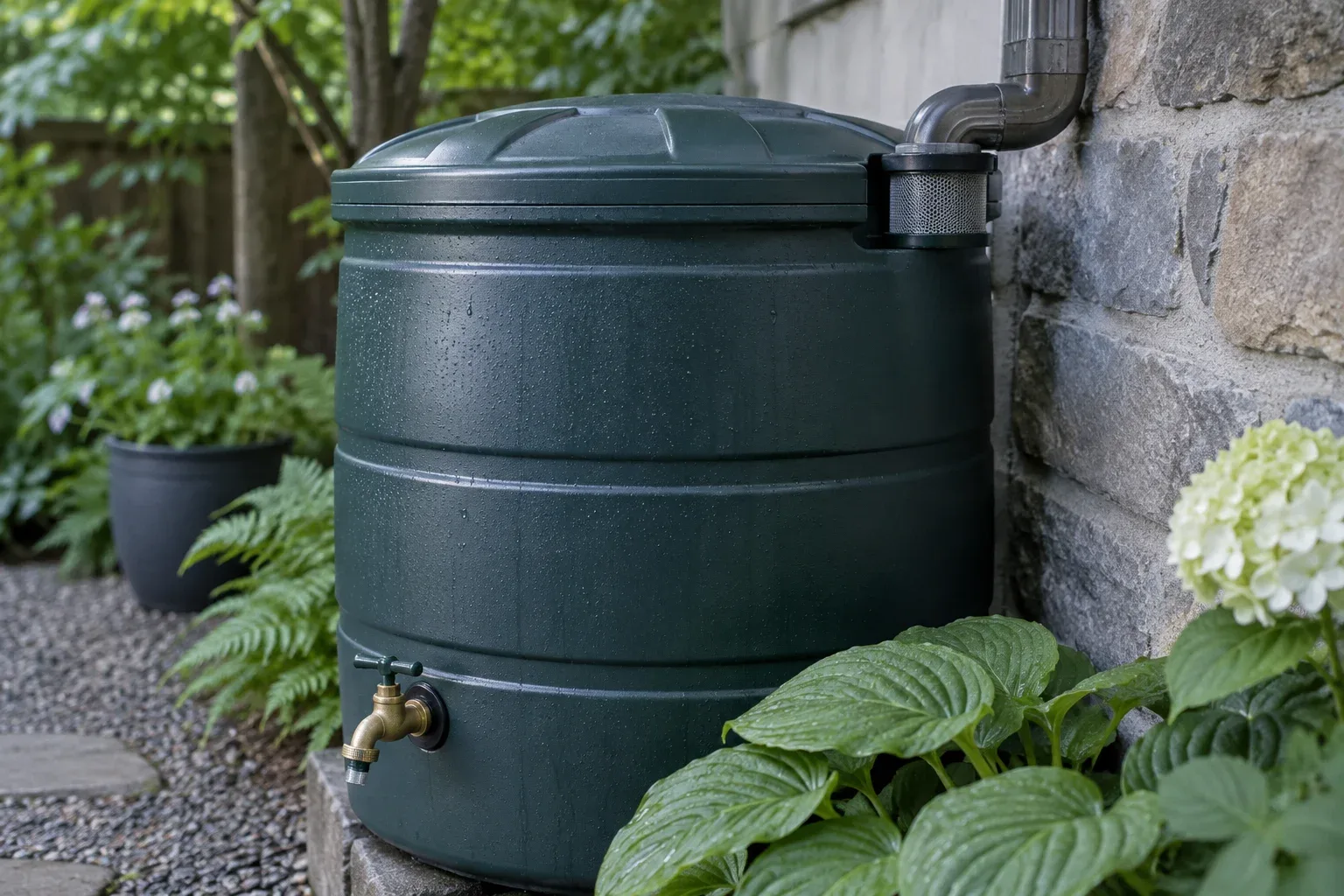
How Long Does Stored Rainwater Last?
The question has two meanings: how long a volume can supply demand and how long water remains suitable for a particular use. Only the first can be answered with a simple volume calculation. Suitability depends on source water, storage conditions, treatment and exposure. A calculator showing a number of days is not a water-quality expiry date.
Read guide ↗ Rainwater harvesting
Rainwater Harvesting for Small Homes
For a small property, accessibility and a modest, regular demand often matter more than a large annual yield. Start with the beds or containers you genuinely water. Sketch walking routes, door clearance and the hose path. A barrel that blocks access or is awkward to empty may receive rain while contributing little useful water to daily gardening.
Read guide ↗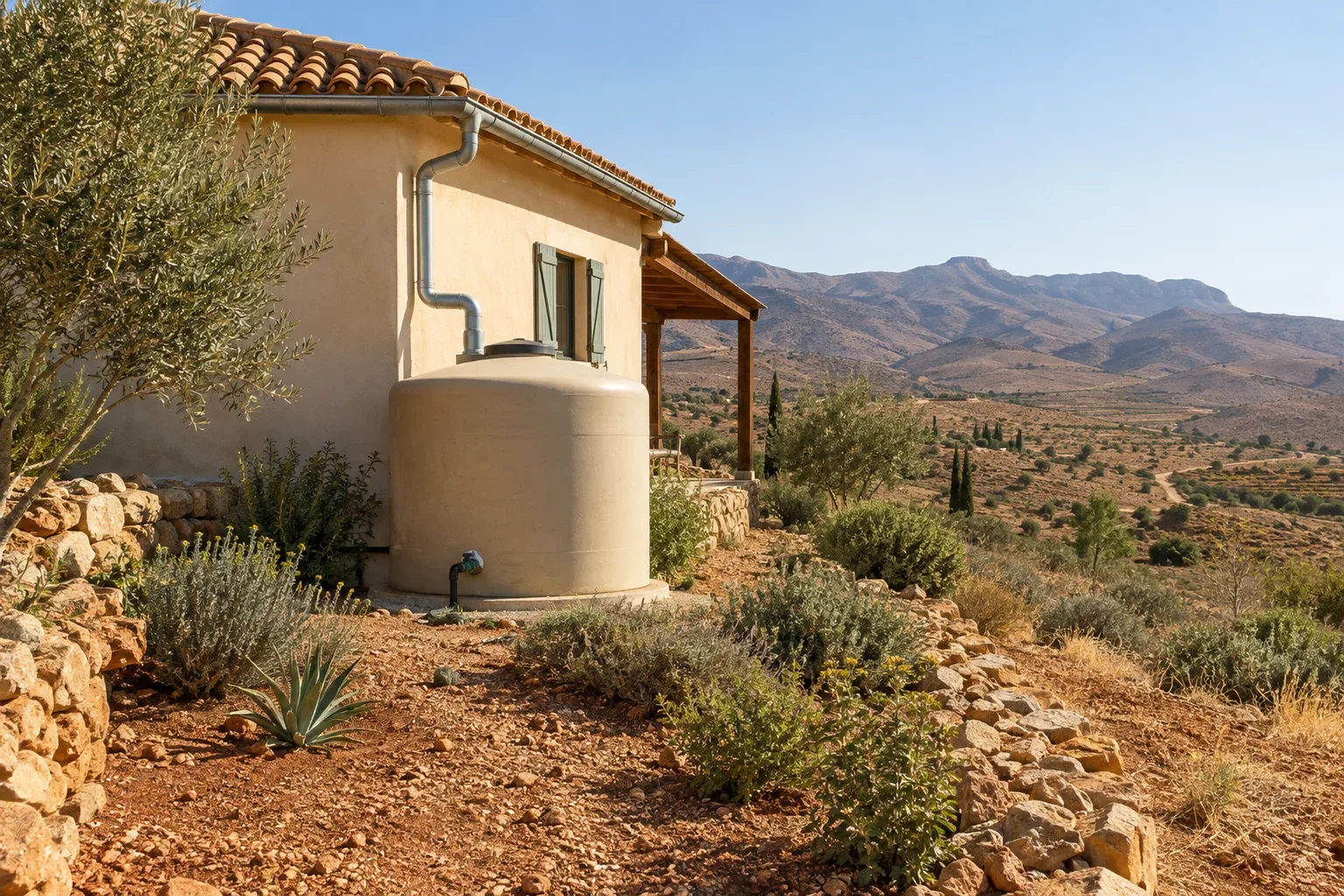 Rainwater harvesting
Rainwater Harvesting in Dry Climates
In a dry climate, a useful annual rainfall total can still arrive in a few events separated by long rainless periods. Describe the longest relevant gap and which uses must continue through it. Decide whether rainwater is a supplemental source or a supply expected to meet essential demand. These two objectives lead to very different acceptable risks and storage requirements.
Read guide ↗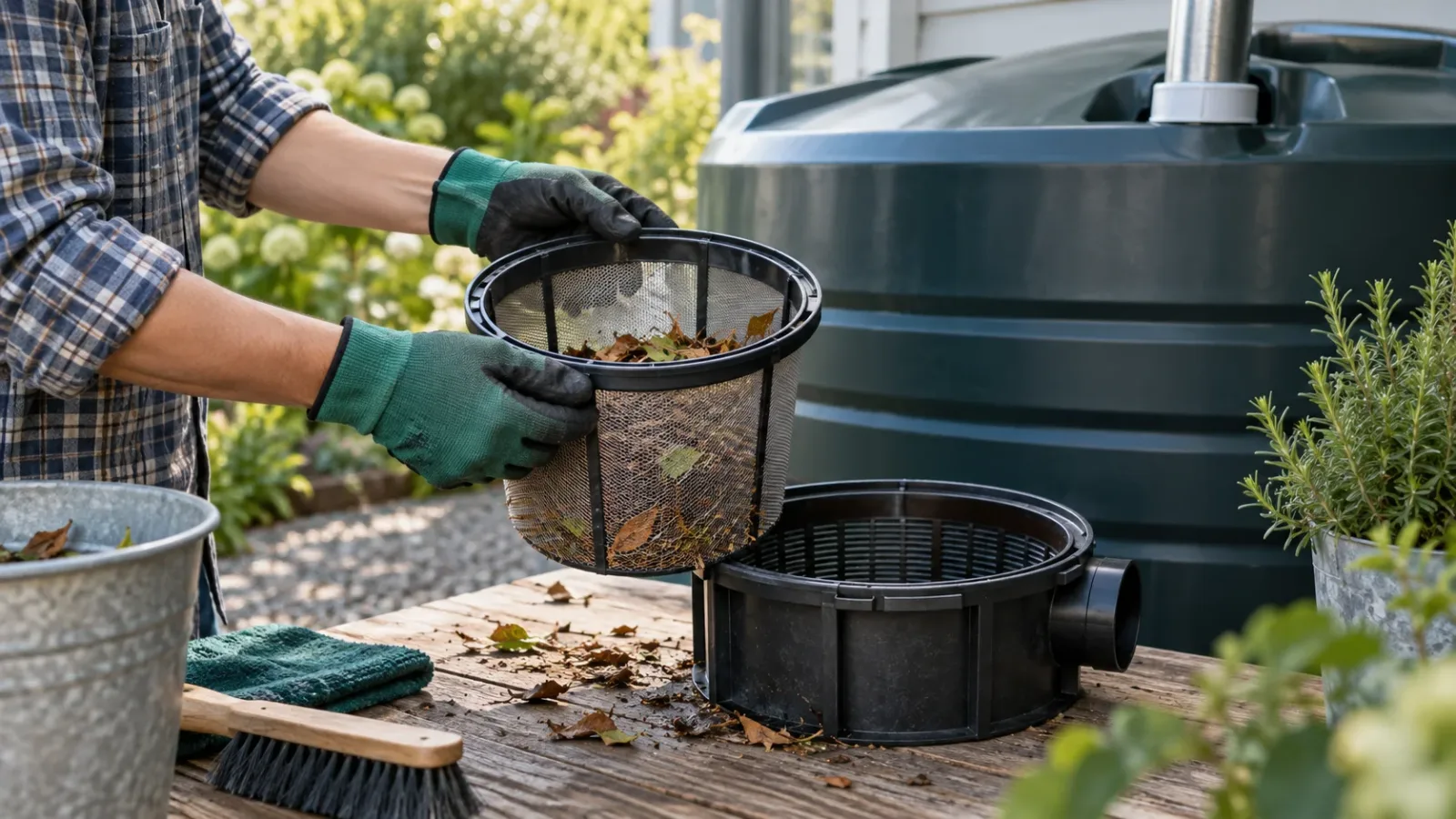 Water storage
Rainwater Tank Maintenance
List installed components, manufacturer instructions, inspection access and the person responsible for each task. Include the roof collection route, screens, tank, overflow, valves and delivery equipment. A maintenance plan should make a fault easy to identify and isolate. Follow product requirements rather than adopting an unsupported universal cleaning interval for every climate and use.
Read guide ↗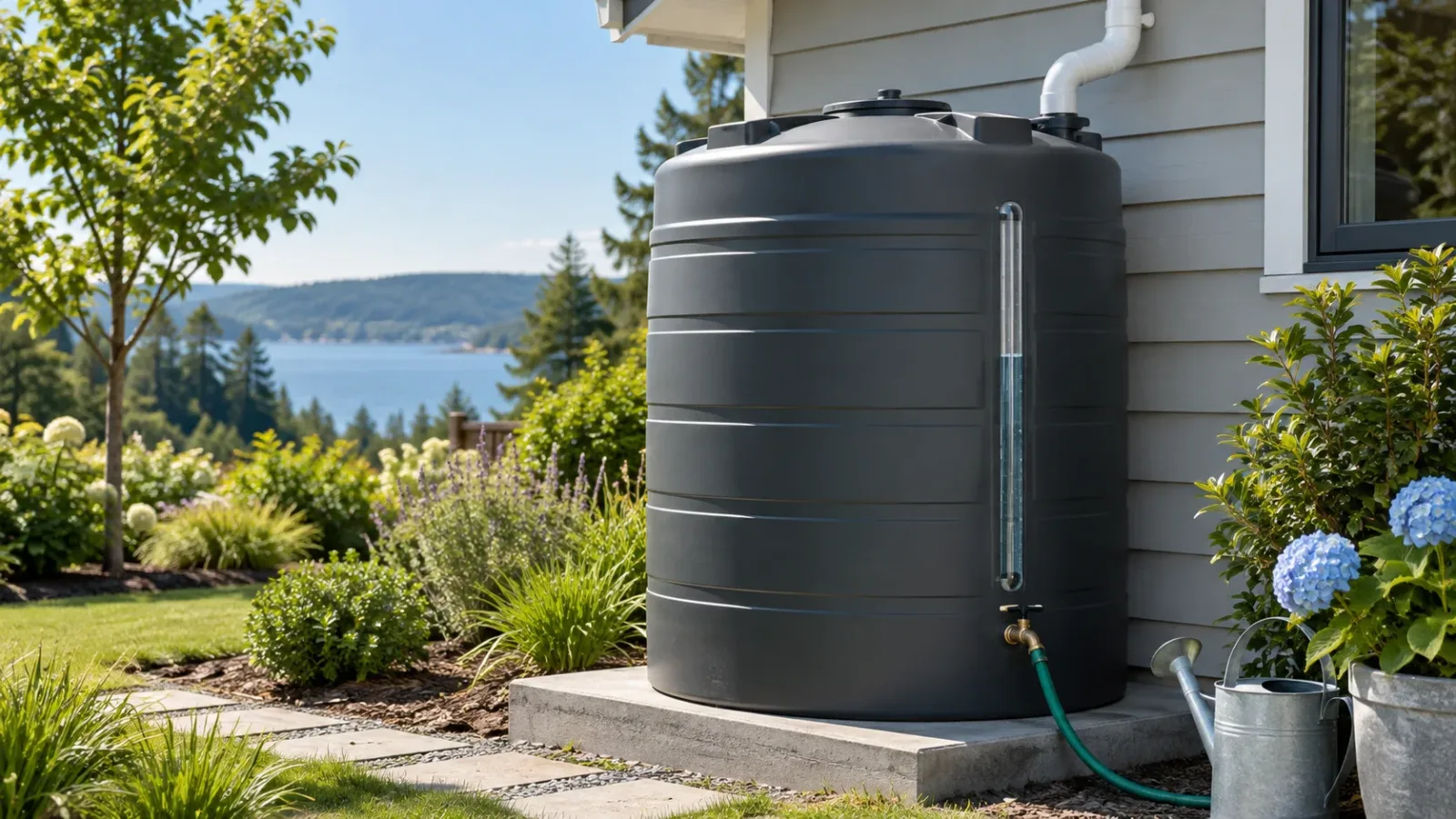 Water storage
How to Choose a Rainwater Tank
Write a short specification describing the uses, required usable volume, outlet flow, installation space and maintenance access. A tank is one component of a system, so compare options against the same specification. A bigger container is not automatically better if it cannot be filled regularly, is difficult to service or needs a costly pump arrangement.
Read guide ↗Sources & method references
Method version 1.0 · Last reviewed: 2026-10-10