WaterCalcLab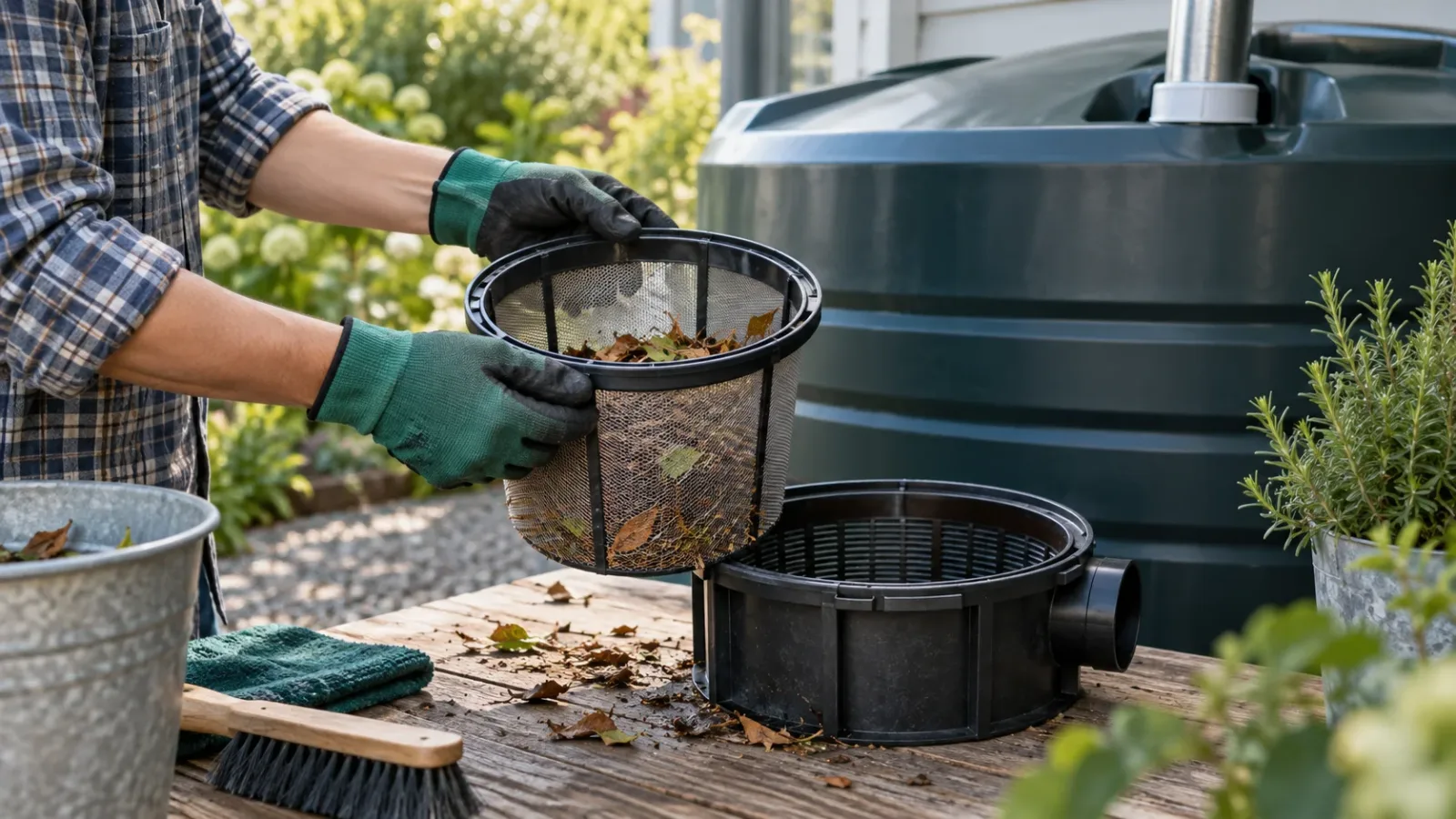
Create a system-specific maintenance record
List installed components, manufacturer instructions, inspection access and the person responsible for each task. Include the roof collection route, screens, tank, overflow, valves and delivery equipment. A maintenance plan should make a fault easy to identify and isolate. Follow product requirements rather than adopting an unsupported universal cleaning interval for every climate and use.
Establish measurable baselines
Record outlet flow, gauge readings and normal filter condition after commissioning. Photograph accessible connections. These references help distinguish deterioration from a longstanding installation limitation. Note date, weather and operating level because gravity flow at a full tank is not directly comparable with flow near the bottom. Log maintenance actions as well as symptoms.
A one-third reduction needs investigation at a comparable tank level.
Known 10 L container; compare similar valve settings and operating conditions.
A flow check can reveal a problem
Suppose a known 10 litre container originally fills in 40 seconds: flow is 10 ÷ 40 × 60 = 15 litres per minute. Later it takes 60 seconds, giving 10 litres per minute, a reduction of one third. Repeat at a comparable tank level before concluding that a filter is blocked. Valve position, pump operation and other simultaneous withdrawals can also affect the measurement.
Inspect accessible components safely
Look for damaged screens, loose covers, visible leaks, blocked routes and unexpected overflow. Isolate equipment as directed before servicing it. Keep electrical components dry and use qualified help when faults involve wiring or pumping equipment. Do not enter a tank to inspect sediment; storage spaces may present serious confined-space hazards even when they appear straightforward.
Escalate quality and structural concerns
Unusual colour, odour or contamination after a roof incident requires assessment of the intended use. Do not improvise a chemical dose based only on container size. Where treatment is installed, its maintenance and monitoring requirements belong in the record. Cracks, unstable supports or unexplained water loss require action before a normal watering routine resumes.
Maintenance checklist
- Keep component manuals.
- Compare flow at similar levels.
- Check covers and screens.
- Inspect overflow.
- Record faults and repairs.
- Isolate before service.
- Obtain qualified help for internal, electrical or structural work.
- Confirm suitability after contamination.
- Review the plan when use or equipment changes.