 WaterCalcLab
Water Pump Flow Calculator
Convert electrical power into a theoretical flow at specified total dynamic head and overall efficiency.
Your result
Bars compare only results in the same unit group. They are normalized, not a time-series forecast.
Planning result based on your inputs.
How this tool works
Convert electrical power into a theoretical flow at specified total dynamic head and overall efficiency.
Q (L/min) = electrical W × η/(1000 × 9.80665 × head m) × 60000Example calculation
The prefilled form is a worked example. Its base-unit inputs and expected outputs are shown below; use the reset button to restore it.
| Input | Example |
|---|---|
| Electrical input power | 500 |
| Total dynamic head | 20 |
| Overall wire-to-water efficiency | 0.5 |
Frequently asked questions
How should I choose the inputs?
Use measurements and local records for the stated period. All preset values are illustrative examples, not recommendations.
What does this result leave out?
Not a pump selection or operating-point prediction. Head includes elevation, pressure and friction. Confirm using manufacturer pump curves, NPSH and system curve.
Continue your plan
Rainwater Tank Size Calculator
Size usable storage for a chosen rainless interval and compare annual supply with constant annual demand. Rainfall here must be annual.
Open calculator ↗Water storageRainwater Storage Duration Calculator
Divide usable storage by a constant daily demand to estimate rainless supply duration.
Open calculator ↗Water storageWater Tank Volume Calculator
Calculate exact geometry from internal dimensions for a vertical cylinder, box or sphere.
Open calculator ↗Related reading
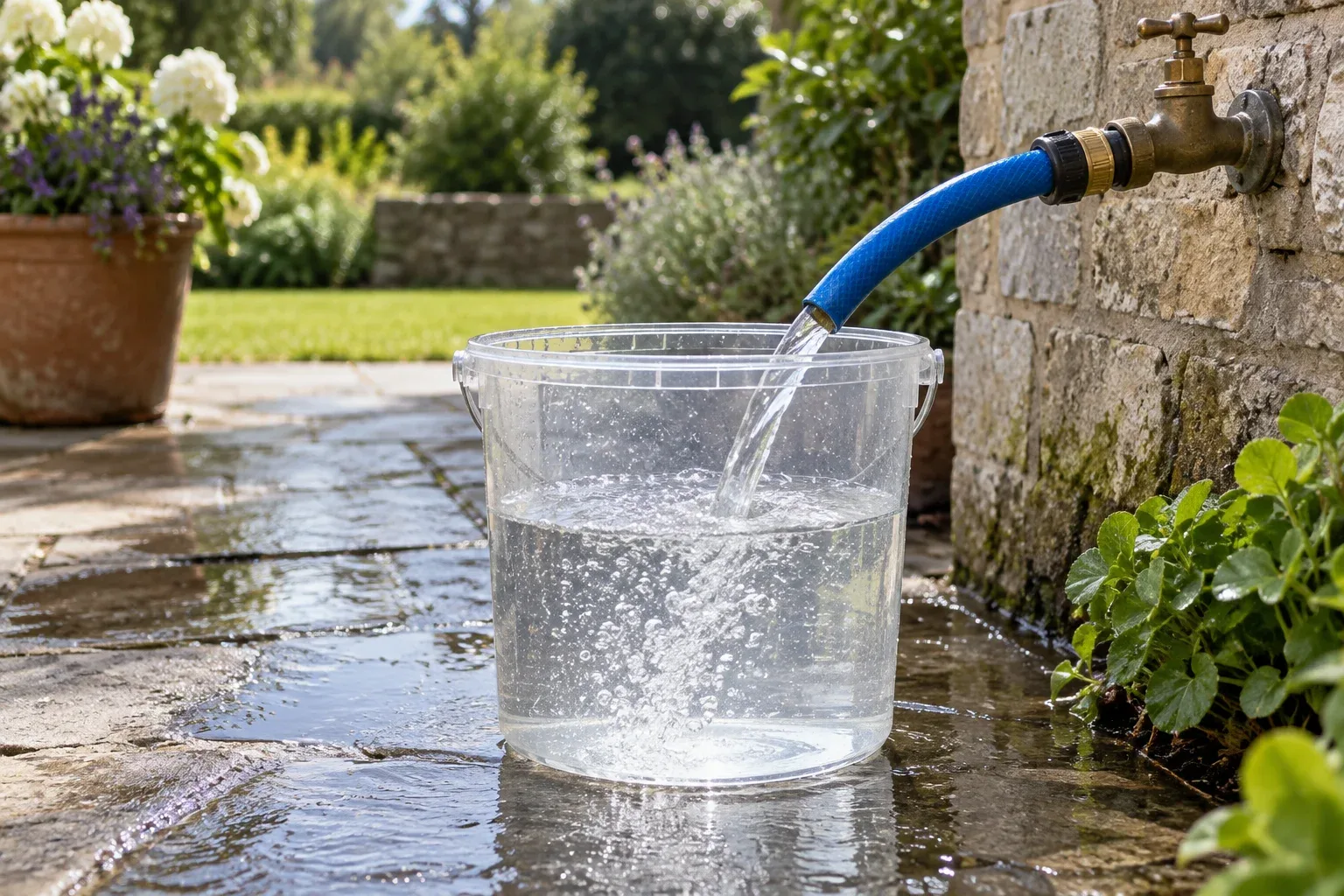 Garden irrigation
Understanding Irrigation Flow Rates
Flow rate tells you how quickly water moves, not whether plants need that amount or whether pressure is adequate. Keep litres per minute distinct from litres per hour. A zone total is the combined demand of the outlets operating together. Read product ratings at the stated operating pressure and do not assume every outlet reaches its label flow under every installation condition.
Read guide ↗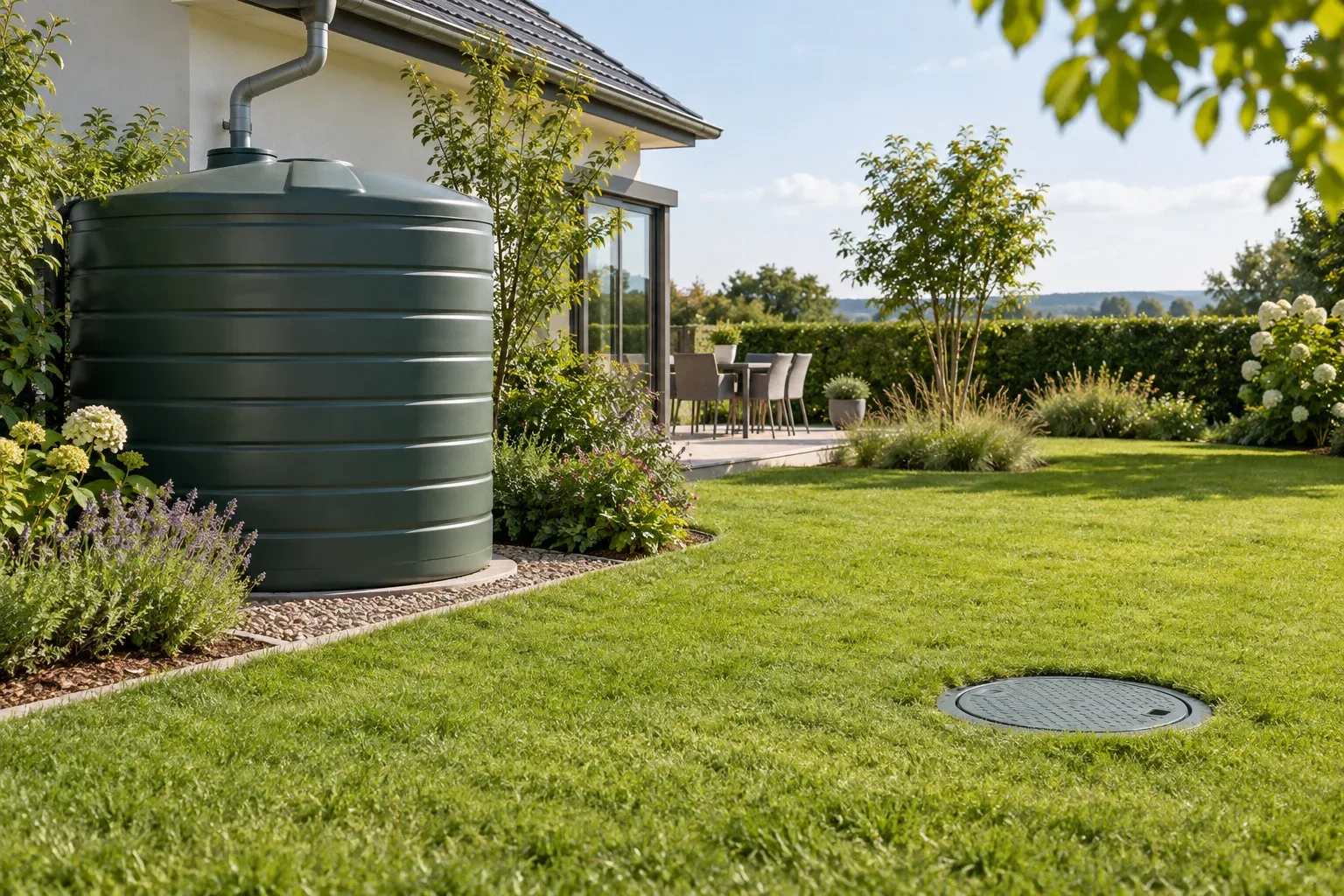 Water storage
Above-Ground vs Underground Water Tanks
Above-ground and buried storage solve different space problems. Sketch available surface area, entrances, utility routes, groundwater conditions and intended tank access. An underground option may preserve garden space, while a surface option may simplify inspection. Neither benefit establishes suitability on its own. Ground conditions and product-specific installation limits need professional assessment.
Read guide ↗ Costs & savings
Rainwater Harvesting Costs
Describe connected roof area, usable storage, permitted end uses and the delivery endpoint before requesting quotes. Ask each installer to price the same scope. A barrel-and-hose arrangement and a buried, pumped building system are different projects. A useful budget makes those differences visible rather than combining them into one unsupported international average installation price.
Read guide ↗Sources & method references
Method version 1.0 · Last reviewed: 2026-10-10