WaterCalcLab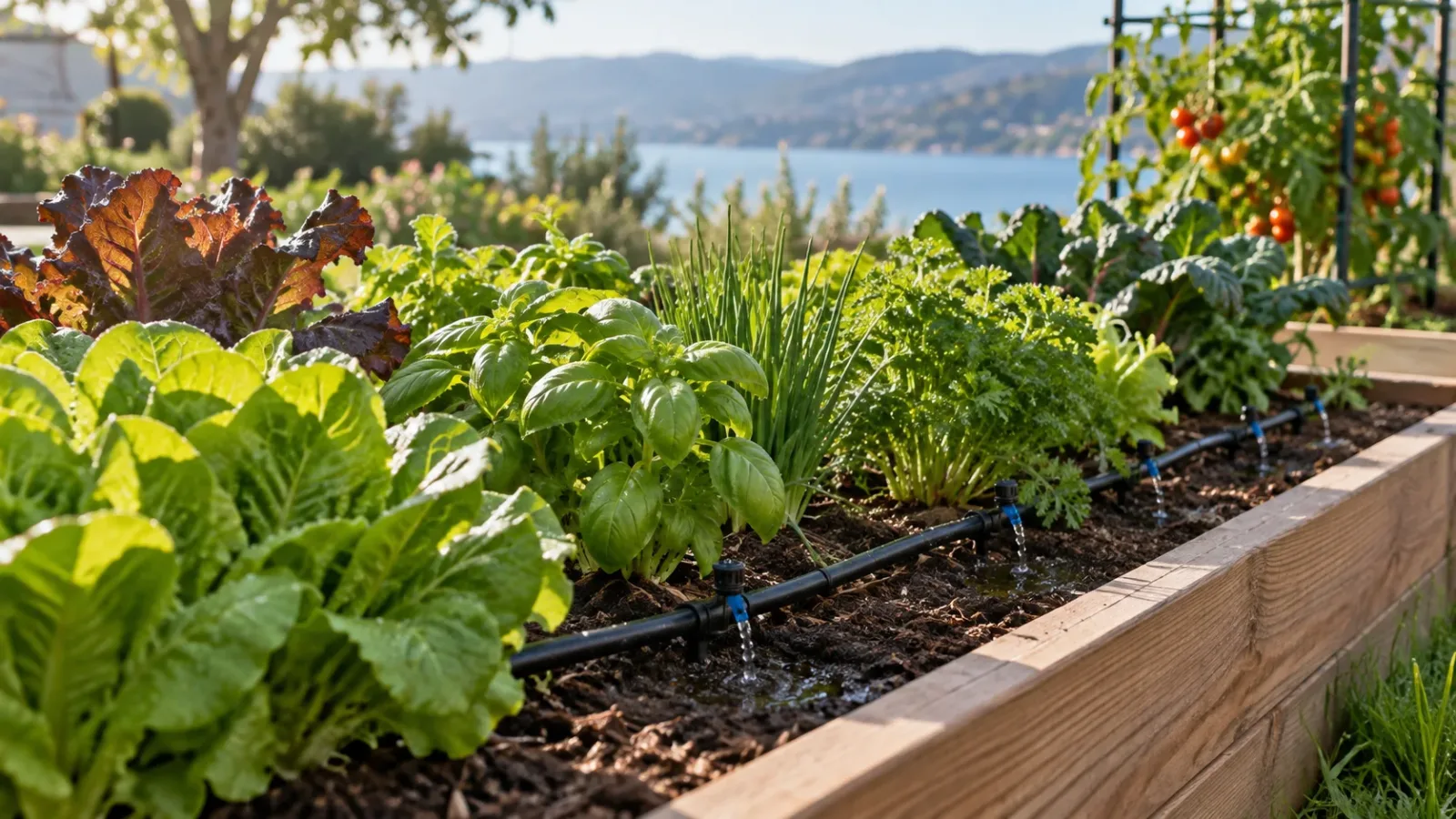
Define the planted area and period
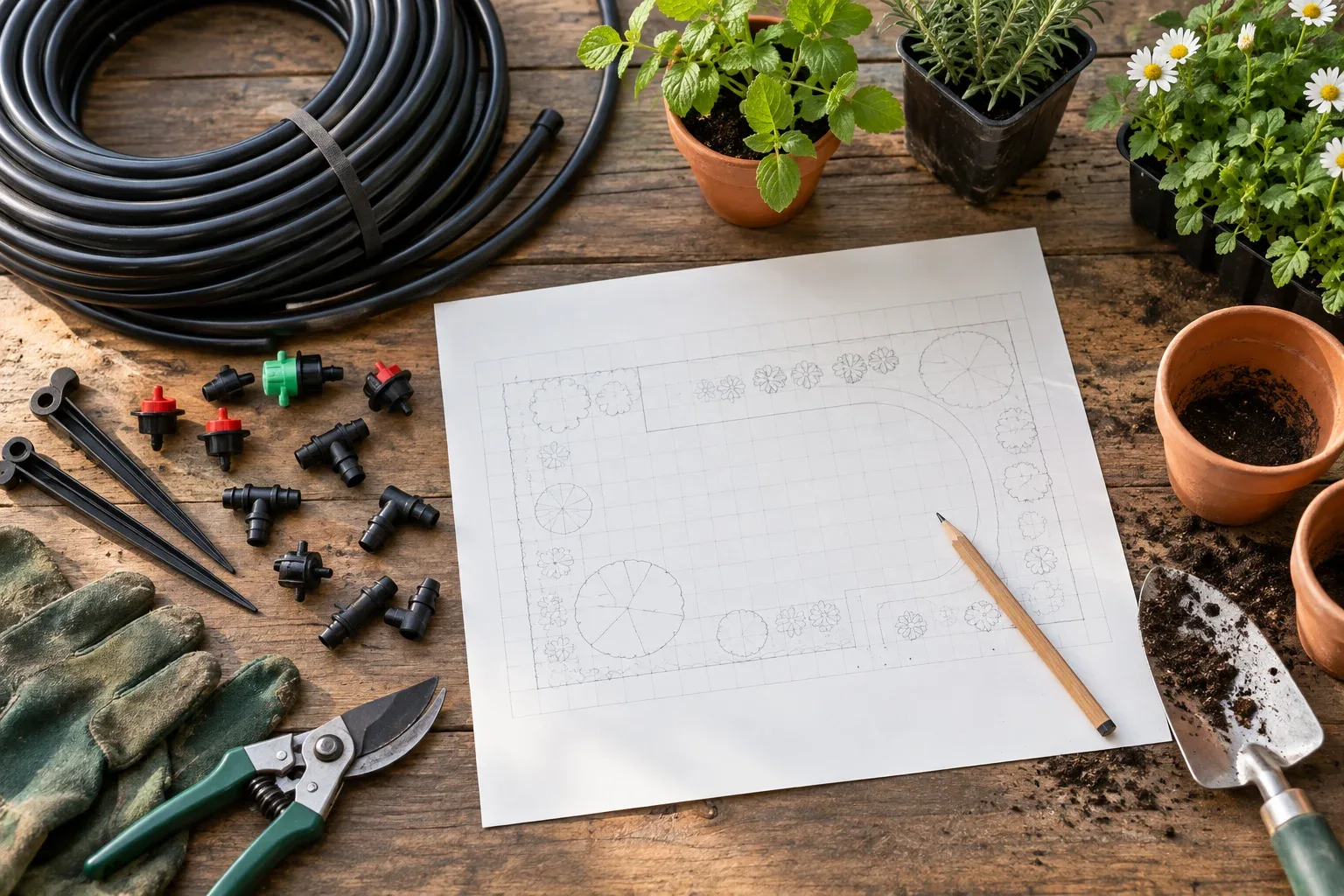
Measure the beds actually being irrigated and choose a period such as one week. Exclude paved paths from the watered area unless overspray is being measured as a loss. Separate plants with different needs rather than applying one garden-wide depth without explanation. A container, vegetable bed and mature shrub zone may need different schedules even on the same property.
Distinguish demand from delivery
Plant demand is a biological estimate. Delivery volume is the water supplied by the system. FAO distinguishes reference evapotranspiration from crop evapotranspiration through crop coefficients under specified conditions. A simple garden depth calculator does not calculate those coefficients or replace local plant advice. Use an appropriate target depth as an input, then convert it into a transparent volume.
The 120 L difference represents assumed application losses.
40 m² × (18 − 6) mm; illustrative locally justified target and effective rain.
A depth-to-volume example
Suppose a locally selected weekly target is 18 mm for a 40 m² bed and effective rainfall contributes 6 mm. The remaining net requirement is 12 mm, equivalent to 40 × 12 = 480 litres. At an assumed application efficiency of 0.80, gross delivery is 480 ÷ 0.80 = 600 litres. The 18 mm target is illustrative, not a universal watering recommendation.
Effective rain needs observation
A rain gauge records rainfall, but not every measured millimetre becomes available in the root zone. Runoff, interception, drainage and soil already being wet can change the contribution. Inspect soil conditions before crediting all rainfall or continuing the original timer. Do not subtract the same rain both from the selected target and again as a separate calculator input.
Check delivery on the ground
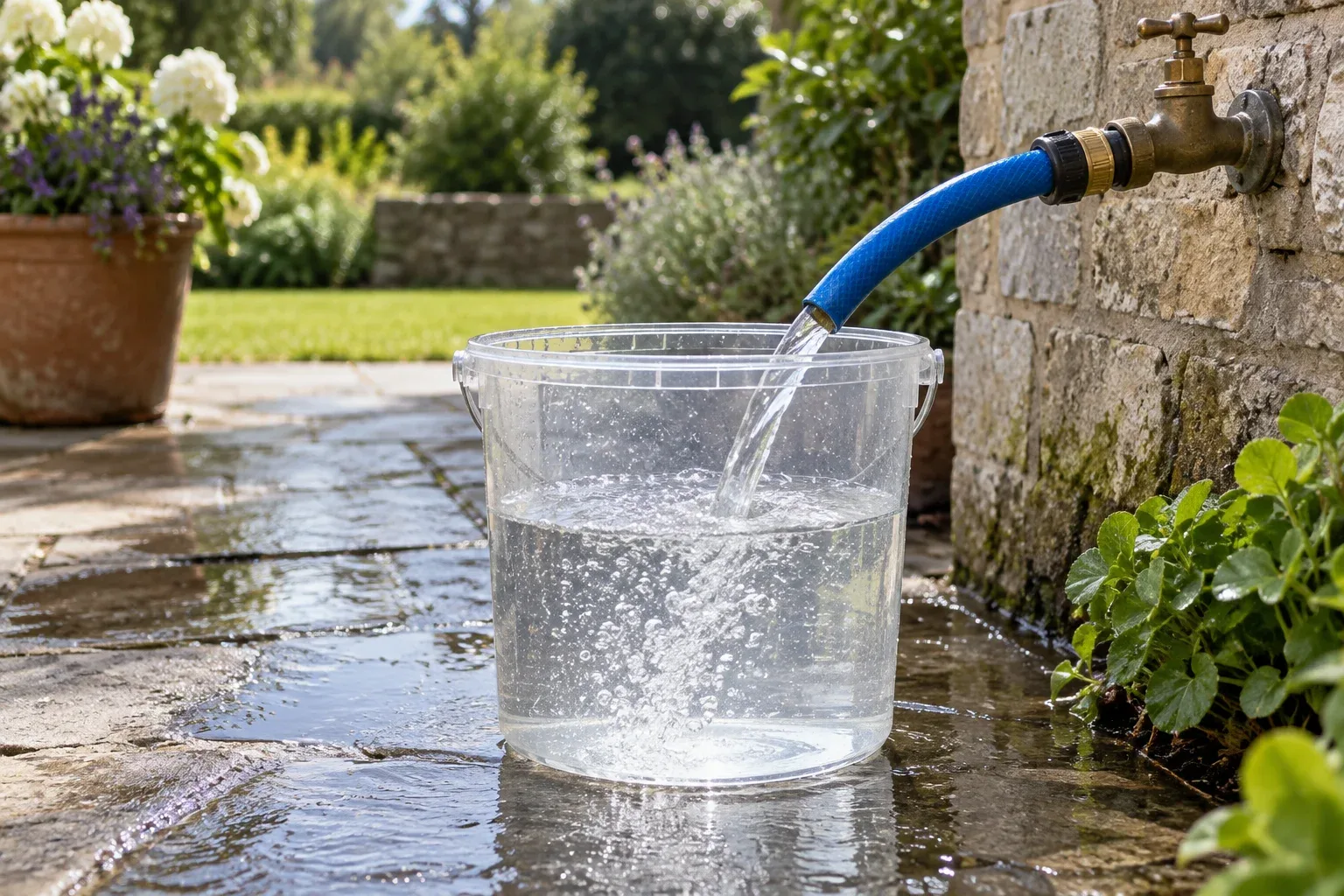
Measure flow and runtime to estimate delivered litres. Examine whether water reaches the intended roots and whether a section remains dry. Compare the calculation with plant condition and soil observations over several cycles. A precise volume is only as useful as the input depth and distribution; increasing runtime everywhere can overwater healthy sections while leaving a blocked line unresolved.
Garden-demand checklist
- Map actual planted area.
- Separate distinct plant zones.
- Select a locally justified depth.
- Record effective rainfall assumptions.
- State efficiency.
- Measure delivered volume.
- Observe root-zone moisture.
- Revise with weather and growth stage rather than treating a single weekly result as permanent.