WaterCalcLab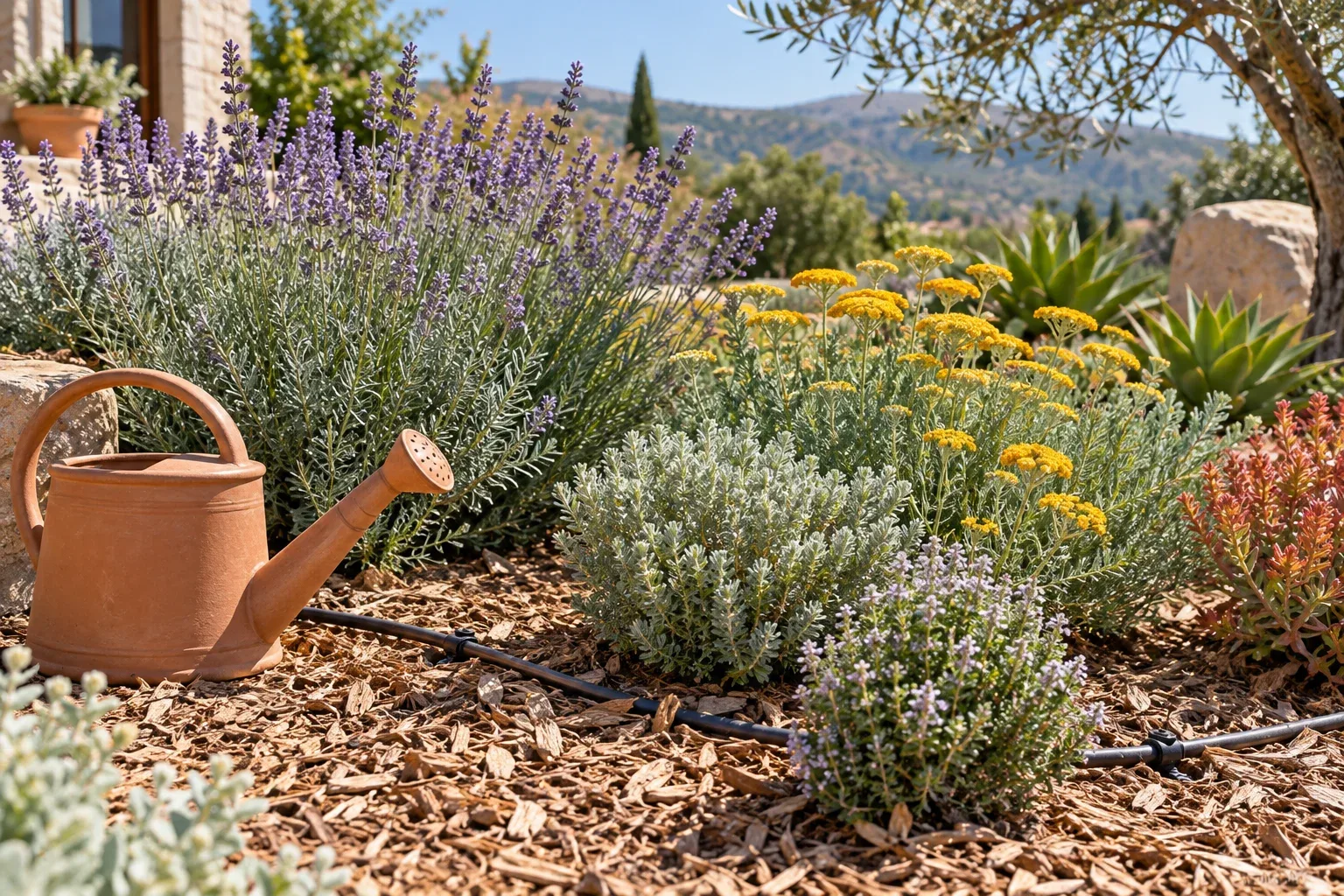
Measure a baseline before changing equipment
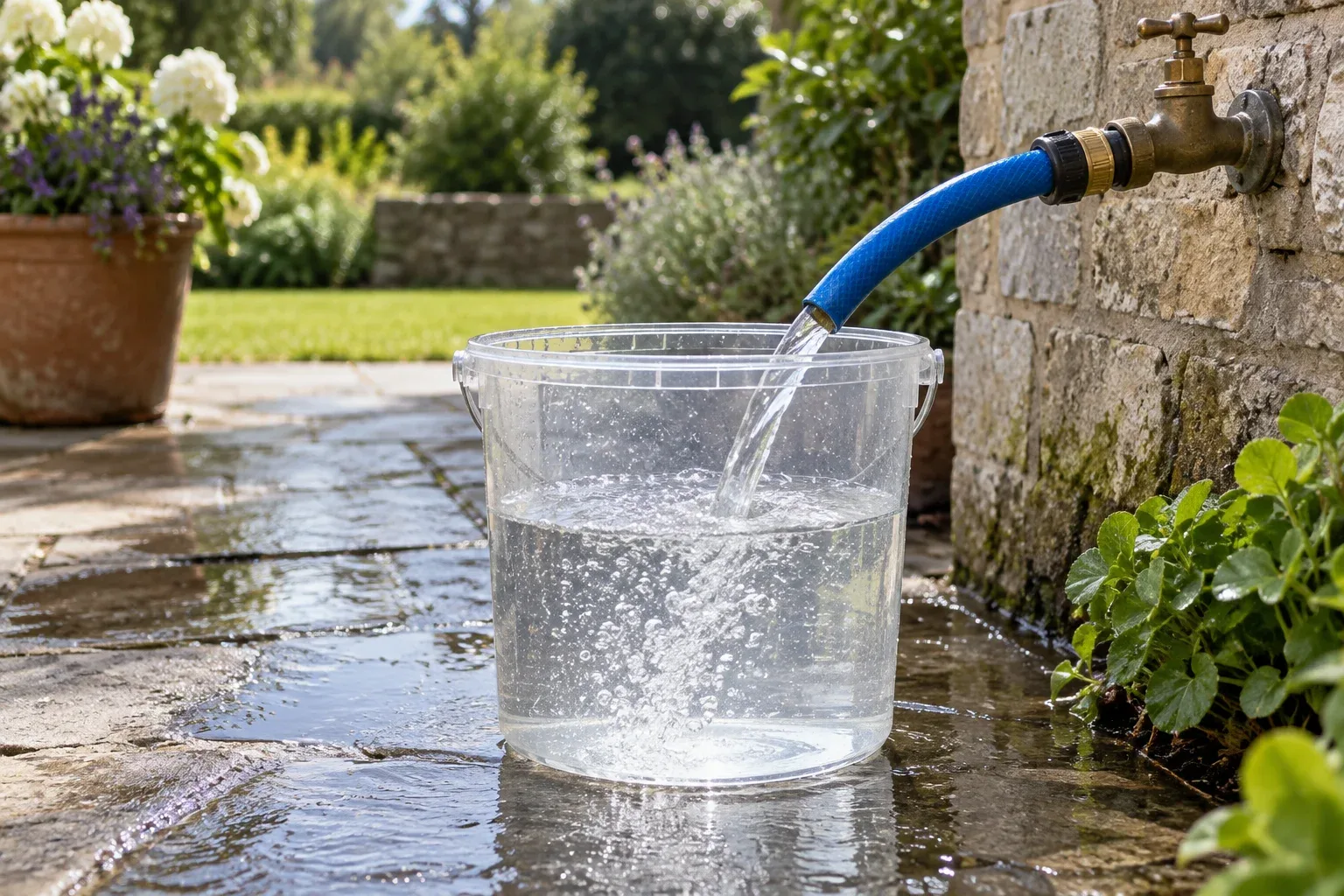
Record watering events, measured flow and runtime by zone. Note rainfall, weather and plant condition. A bill for the whole house mixes garden use with other consumption, so a submeter or event log can be useful. Establish which zones consume most before buying hardware; a small low-use bed offers less volume-saving opportunity than a poorly controlled large zone.
Remove water that misses the task
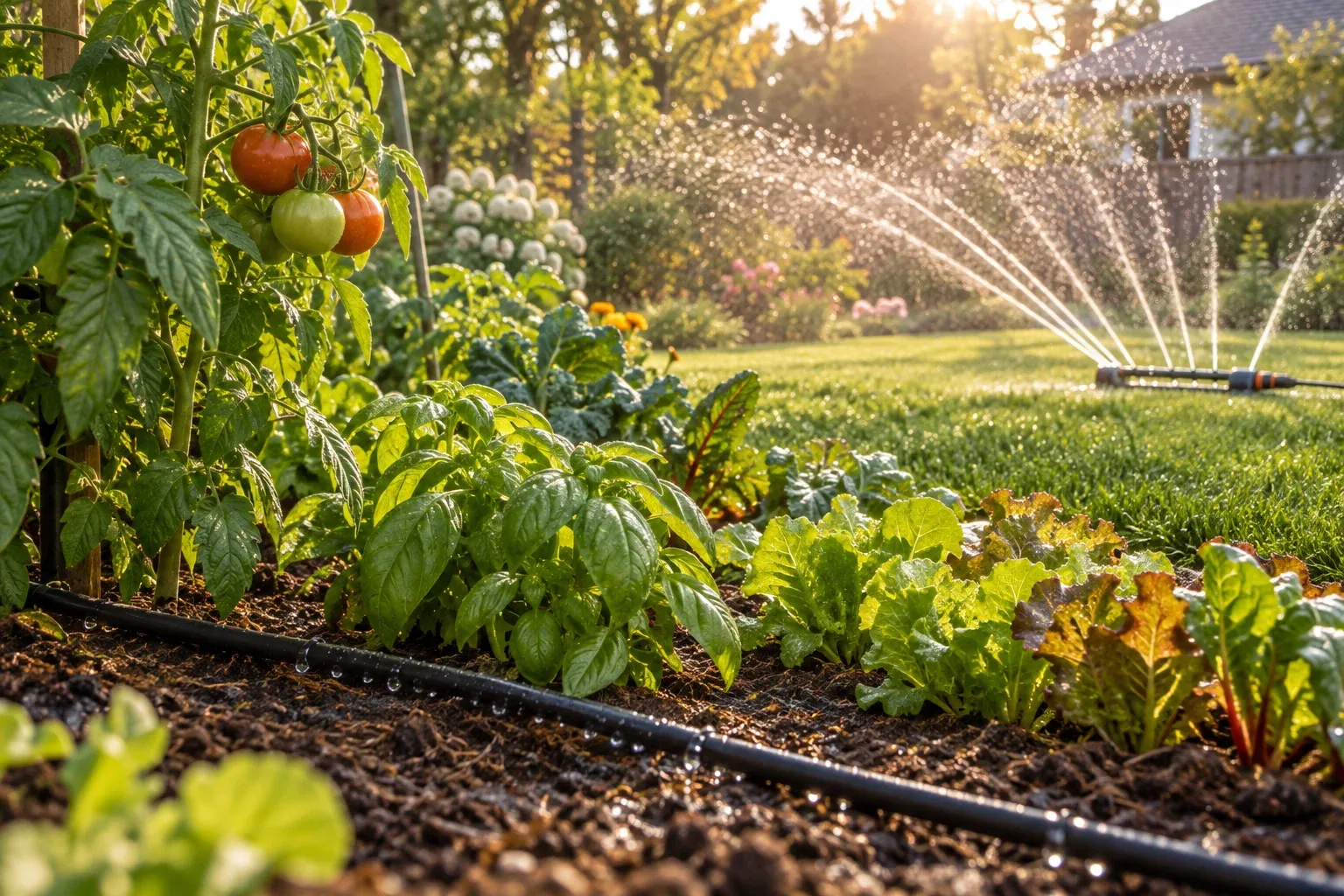
Observe one complete cycle and identify water reaching paths, escaping connectors or flowing beyond the intended bed. Fix clear delivery faults before reducing the amount reaching plants. Next examine whether the planting and exposure justify separate schedules. Grouping distinctly different needs into one timer often forces a compromise that supplies some areas unnecessarily.
Over twelve comparable weeks the scenario difference is 7,200 L.
Measured zone flow 10 L/min; revised watering must remain suitable for plants.
Quantify one timer change
A measured 10 litre-per-minute zone runs 30 minutes four times weekly, using 1,200 litres. If observations support 20 minutes three times weekly, the scenario uses 600 litres, saving 600 litres per week. Across 12 comparable weeks, that is 7,200 litres. This result assumes the measured flow stays constant and the revised schedule remains suitable; it is not a recommended schedule for every garden.
Protect plant outcomes
Reduce water in an observed, reversible trial and inspect soil and plants. Mulch, suitable planting and improved soil management can support conservation, but their effect should not be assigned an invented universal percentage. Preserve water for establishment and sensitive growth stages where local advice calls for it. Revisit the trial during hotter or windier conditions rather than keeping a fixed annual timer.
Verify the result
Compare equivalent periods and document rainfall differences. If mains use falls because a rain tank substitutes water, label that substitution separately from a reduction in irrigation demand. Both can be beneficial, but they answer different questions. A garden might use the same total volume while drawing less from the water utility, so the reporting boundary matters.
Reduction checklist
- Measure zone-level use.
- Repair visible waste.
- Separate distinct needs.
- Test schedule changes with plant observations.
- Adjust for rain.
- Distinguish demand reduction from rainwater substitution.
- Compare similar weather periods.
- Retain a record of the settings that produced acceptable results.