WaterCalcLab
Build a household water inventory
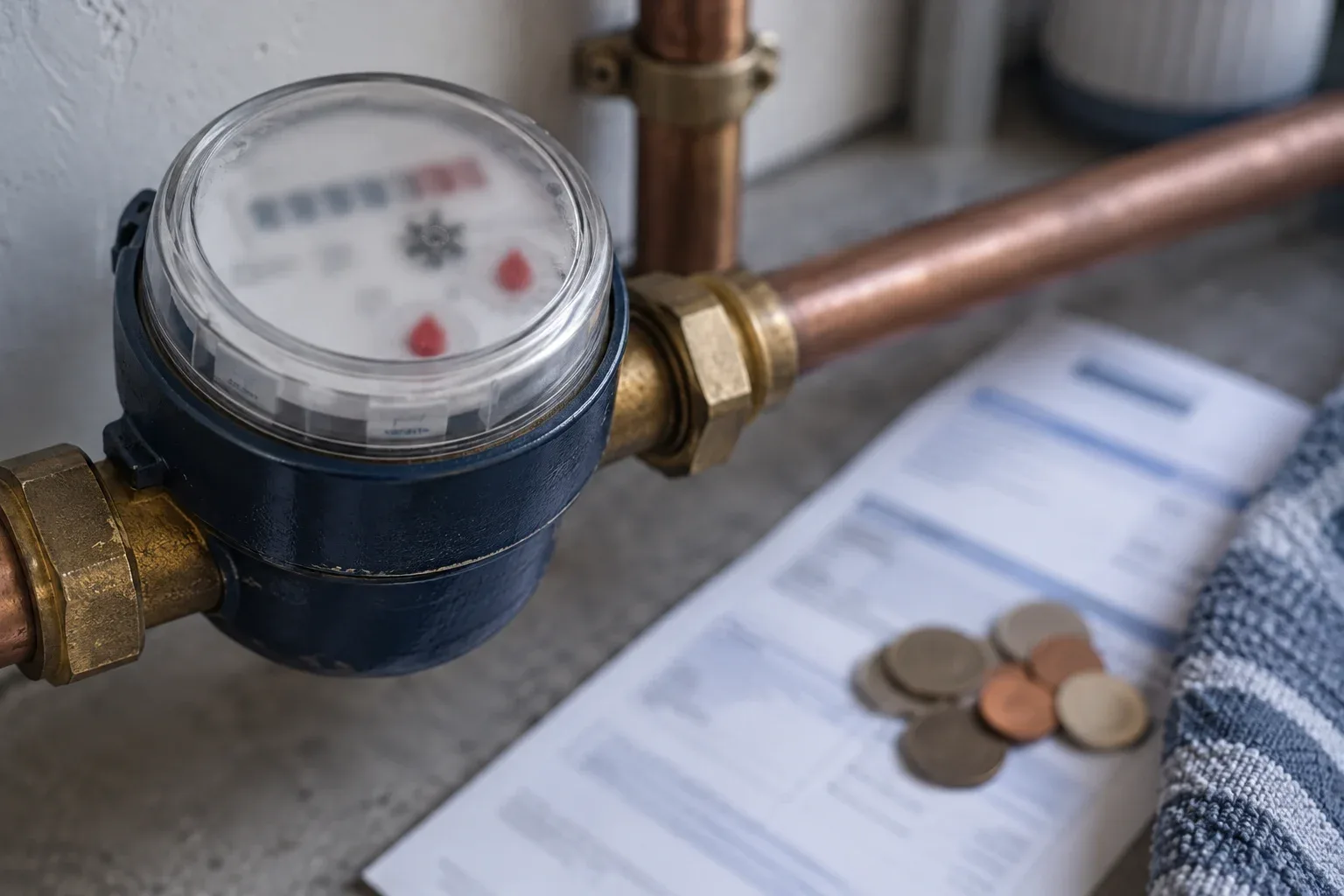
List regular activities and any fixtures or equipment involved. Record occupancy and separate indoor use from irrigation where possible. Meter readings reveal the whole-home total; event measurements explain where it goes. Focus first on avoidable use that can be changed without compromising necessary hygiene, health or the performance of essential equipment.
Measure a repeated activity
Use a known-volume container or a meter to establish flow, and record how long the activity actually lasts. Product ratings can support estimates, but installed performance and user behaviour matter. A lower nominal flow may not reduce consumption if runtime increases enough to offset it. Keep an actual-use log when evaluating an intervention.
At a constant pattern the two-person scenario totals 11,680 L over 365 days.
Measured 8 L/min; duration changes from eight to six minutes; illustrative behavior scenario.
A shower-duration scenario
For an illustrative measured flow of 8 litres per minute, reducing one daily shower from eight to six minutes avoids 16 litres a day. Two people making that change avoid 32 litres daily, or 11,680 litres over 365 days if the pattern is consistent. This is a behaviour scenario, not a recommended hygiene limit or a product-performance claim.
Prioritize leaks and unnecessary operation
Inspect fixtures, supply connections and equipment for visible or unexplained loss. A meter moving during a genuinely no-use interval warrants investigation, although automatic equipment must be accounted for. Arrange appropriate repair for plumbing faults. Do not alter devices in ways that conflict with their safety requirements; conservation should preserve intended function.
Verify improvements with a fair comparison
Compare use per person per day across equal periods, noting visitors, absences and seasonal irrigation. A household of four and a household of two should not be judged from total volume alone. If a fixture is replaced, assess performance and user acceptance as well as the meter result. A change that users immediately reverse is not a durable saving.
Home-conservation checklist
- Record occupancy.
- Inventory repeated uses.
- Measure installed flow.
- Identify leaks.
- Distinguish indoor and garden consumption.
- Keep essential functions intact.
- Compare equal periods.
- Normalize carefully.
- Verify that new settings remain practical.
- Document the measured change rather than advertising a universal percentage.